
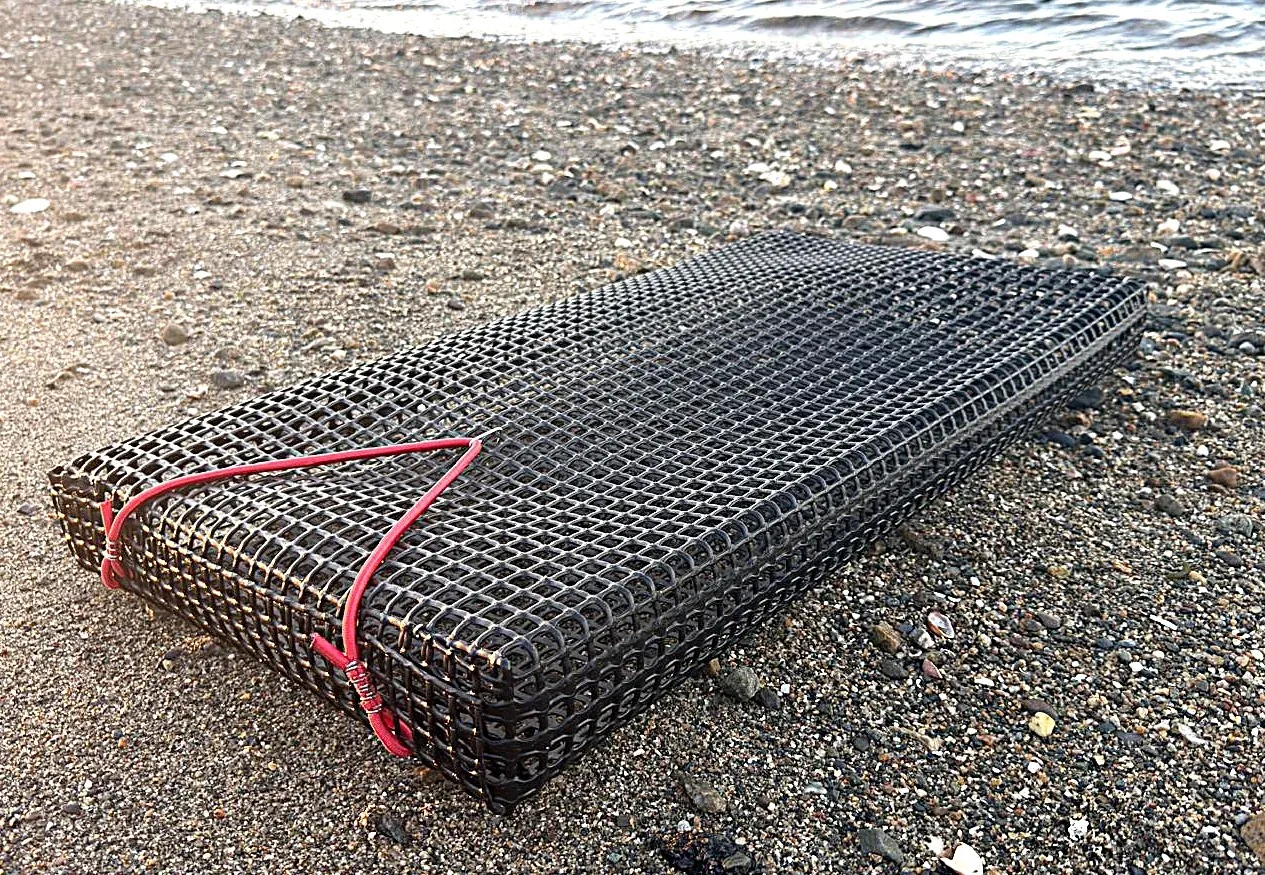
Inspect before and after handling
Check the mesh, seams, end closures, fasteners and attachment points for cuts, looseness, deformation or wear. Record recurring damage and replace or repair only according to the agreed product and farm procedure.
Remove fouling with a suitable method
Choose cleaning tools and pressure to suit the material and mesh structure. Avoid assuming that a chemical, heat treatment or high-pressure method is safe for every polymer or farm site; check supplier guidance and local environmental requirements.
Keep records by bag or batch
Note cleaning dates, observed fouling, damage, repairs and the conditions in which the equipment was used. These records help identify maintenance patterns and improve future product selection.
Store and handle responsibly
When equipment is out of service, clean and store it in a way that prevents unnecessary UV exposure, tangling or contamination, consistent with the supplier’s instructions and local biosecurity rules.
QUICK CHECKLIST
- Inspect mesh, seams, closures and fittings
- Use a material-compatible cleaning method
- Follow local environmental and biosecurity requirements
- Record damage, repairs and maintenance dates