Home / Products / Sealed Oyster Mesh Bags

Product 04 / Closure format

Sealed oyster
bags.

A pre-closed end changes the way a bag is filled, opened and maintained. Define both ends, not just the word “sealed.”

Product overview

One end closed. One end accessible.

A sealed oyster mesh bag commonly has one end closed during fabrication and another end that can be secured after filling. The open end may be handled with a separate fastening method. The exact end treatment and bag construction should be stated on a drawing or sample, especially when replacing an existing bag.

Selection principle. “Sealed” describes an end treatment, not a watertight bag; this remains an open mesh structure for aquaculture.

What to specify

For a replacement bag, provide a photo of both ends and a dimensioned sample drawing. That makes the intended closure much easier to discuss.

Use the inquiry guide
PRODUCT DATA / 04 — END CLOSURE

Product data
& specification

“Sealed” should describe a defined mesh-bag end treatment—not a watertight bag. Specify the closed end, the filling end and how the bag is reopened or secured during use.

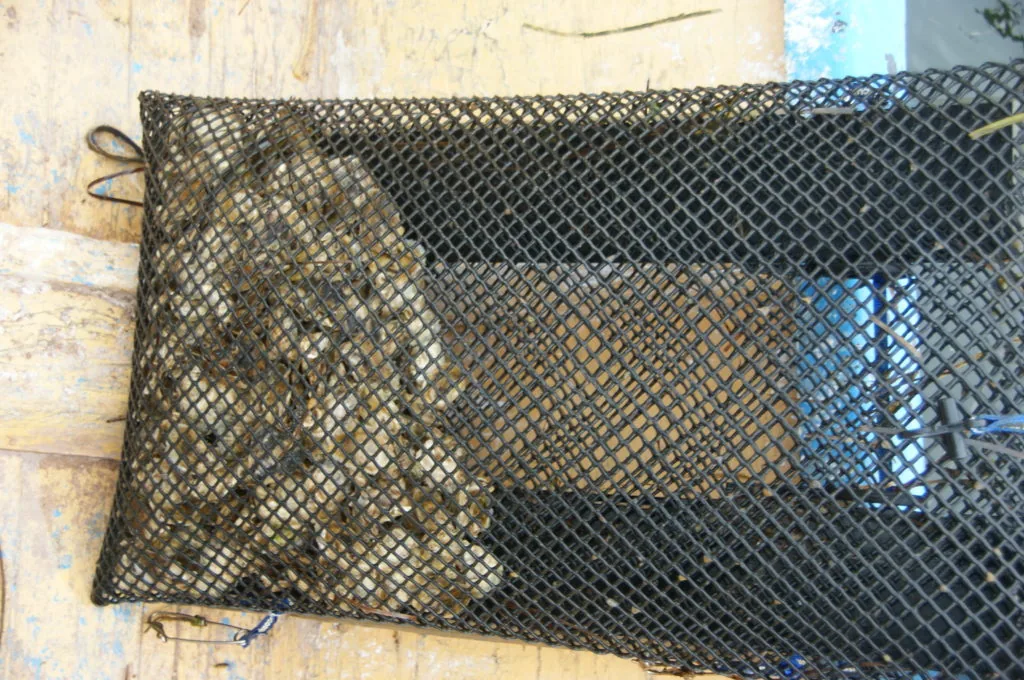
Oyster mesh bag shown with oyster stock
Example of a mesh bag in use; end closure is not specified by this image.
ParameterWhat to defineUnit / evidence
Mesh materialPolymer/resin grade, additives and UV documentationSupplier data sheet / agreed material declaration
Mesh opening & patternMeasured opening and square/diamond patternmm; method and tolerance stated
Finished dimensionsLay-flat width and finished length after end treatmentmm or cm; define measuring state
Closed-end methodHeat-fused, stitched, ring-closed or other clearly defined methodConfirm actual offered construction
Accessible endOpen edge and required re-closure method after fillingShow hook/ring/tie/clip on drawing
Edge finishCut edge, reinforced edge or other finishPhoto/sample approval
Weight & toleranceFinished bag mass by mesh and dimensionsg per bag; verify on approved sample
InspectionSeam/closure integrity and visual acceptance pointsDefine sample plan / workmanship criteria
PackingBundle/carton/pallet style and pieces per unitConfirm for destination and handling

Specification statusConfirm closure construction, finished dimensions and unit mass against a sample or approved drawing. Specify the loading and re-closure actions for the selected bag.

BUYER’S GUIDE

Show both ends in the RFQ

A single top-view photo can hide how the bag is loaded and closed. Include one image of each end, a side view, a dimensioned lay-flat width/length, and the required re-closure hardware. Specify if you are replacing a bag or designing a new format.

RFQ CHECKLIST

01
Identify fixed end

State whether the end is fused, stitched or mechanically closed.

02
Identify access end

Describe how it opens for loading and how it is secured in service.

03
Check usable size

Give finished dimensions after closure—not raw mesh cut dimensions.

04
Approve finish

Inspect edges, closure consistency and fastener fit on a pre-production sample.

COMMON QUESTIONS

Is a sealed oyster bag waterproof?

No. It remains mesh netting. “Sealed-end” refers only to the specified end closure.

Can both ends be closed?

That depends on the design and use process. Explain how the bag will be loaded, emptied and maintained.

Which closure method should I select?

Choose it to match the mesh construction, handling loads and desired access; confirm the actual option with a sample and drawing.

Continue exploring

Compare the
whole range.

Review related bag forms before settling on mesh and dimensions.

Browse products