
Product index / 01—04
Oyster bags,
in context.
Compare bag formats by farming method and growth stage before specifying dimensions or mesh opening.
Product groups
Find the
right format.
The same oyster farm may use several bag types across its production cycle. Start with the intended use, then confirm details for your system.
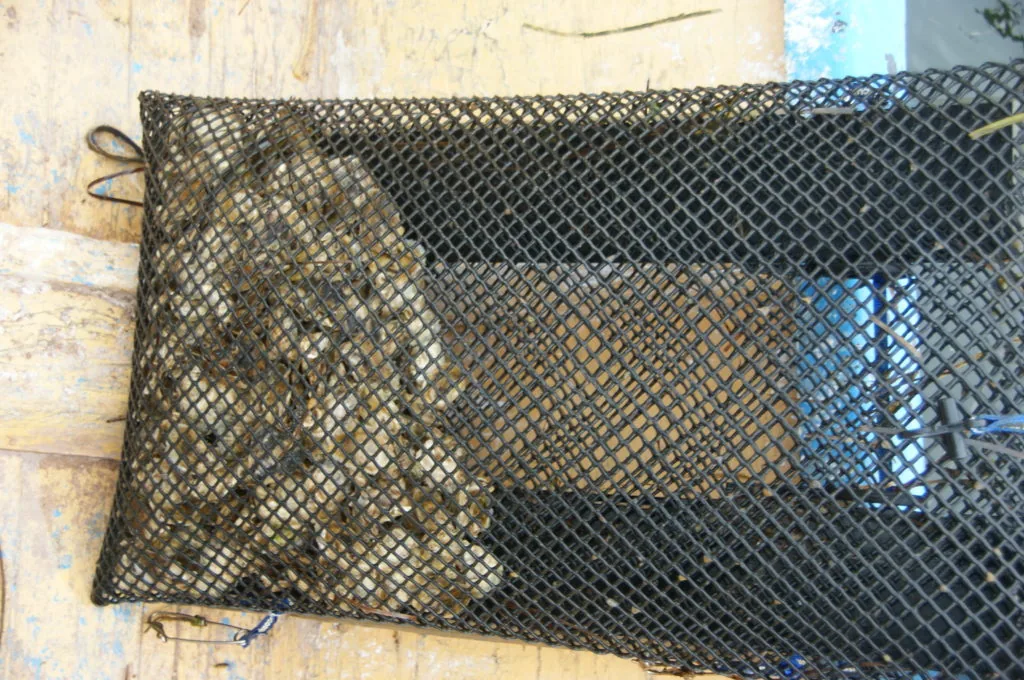
From the field
Describe what goes inside the bag.
Stock size and handling conditions help narrow the mesh opening and finished bag format. Include both when requesting a product configuration.
BUYER’S FIELD GUIDE
Compare the
bag formats
Choose by stock stage and farm method first. Then specify opening, finished dimensions, closure and any supporting hardware.
| Parameter | What to define | Unit / evidence |
|---|---|---|
| Oyster mesh bag | Core containment format; define pattern, opening, dimensions and ends | All grow-out / replacement inquiries |
| Floating oyster bag | Mesh bag integrated with buoyancy and farm-line connections | Floating or surface-culture setup |
| Nursery / spat bag | Smaller-stock application; prioritize retention target and opening measurement | Early-stage stock; host system must be stated |
| Sealed-end bag | One mesh end has a defined permanent closure; opposite end provides access | Where an end treatment is specifically required |
Before orderingProduct labels do not establish an interchangeable standard. Use a drawing or approved sample to confirm units, measurement method, tolerances and end construction.
Specification guide
Four decisions,
one clear brief.
For each bag, record the cultivation stage, mesh opening, finished dimensions and how it will be secured or floated.