
1. Identify the growth stage
State whether the bag is for nursery, spat or grow-out use, along with the smallest stock size to retain. This guides the mesh-opening discussion without assuming that one standard opening fits every farm.
2. Describe the culture system
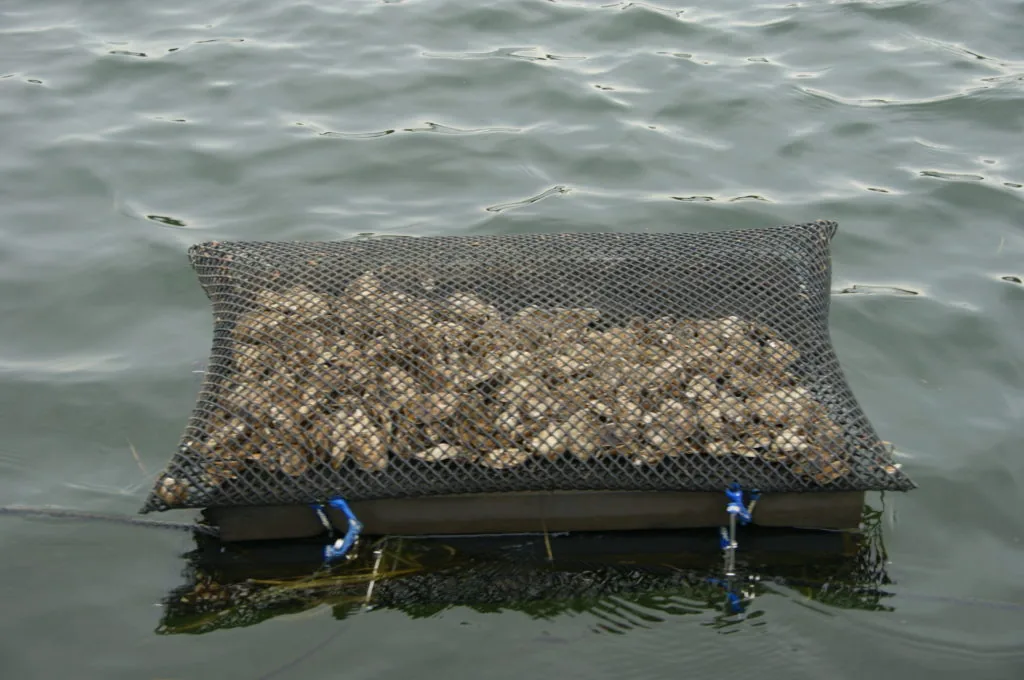
Explain whether the bag sits in a floating, raft, longline, intertidal or other arrangement. Include a site or host-system photo and the line, tray or support dimensions.
3. Choose a bag form and handling routine
Compare basic mesh bags, floating assemblies, nursery formats, sealed-end bags, flip baskets and cages according to how stock is loaded, turned, cleaned and removed. A product label is only a starting point.
4. Complete the specification
Confirm mesh pattern and measuring convention, finished size, both end treatments, accessories, packaging and order quantity. Resolve unknowns on a drawing and sample before production.
QUICK CHECKLIST
- Culture stage and smallest stock size
- Farm system and site conditions
- Mesh opening, bag form and dimensions
- Handling routine, attachments and sample approval